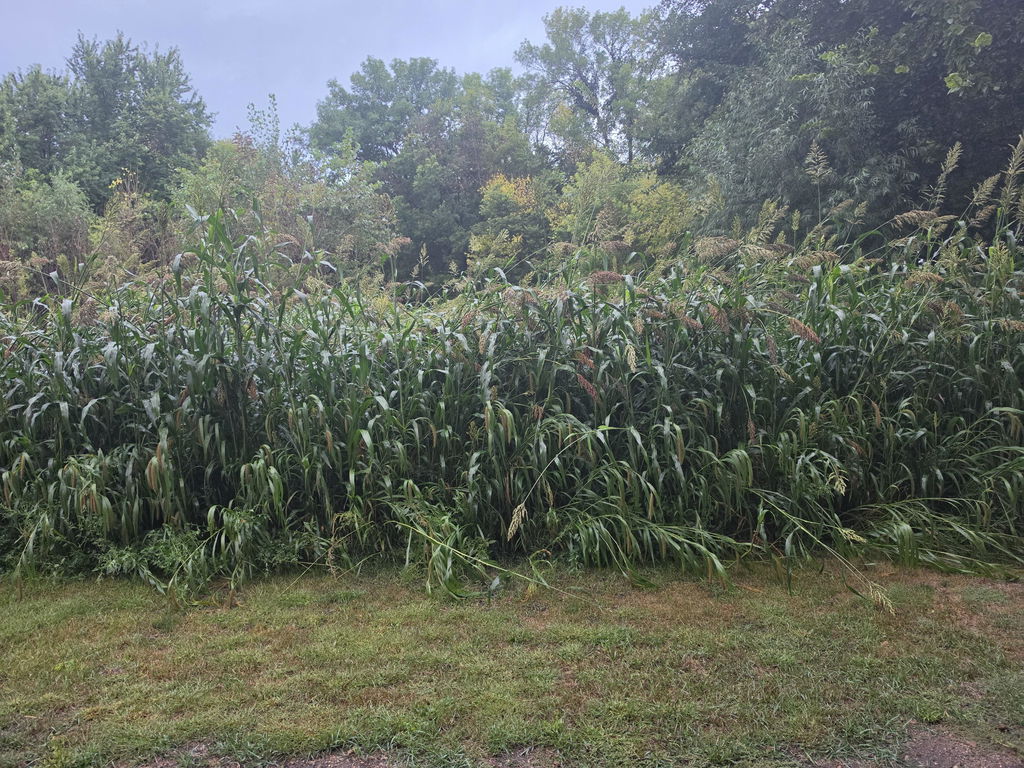
Site Preparation
These are general site preparation options for any seed type.
Plan 2-4+ weeks before planting
Steps:
- Spray the area with glyphosate (Roundup).
-Always follow label instructions for all products used, including rates, adjuvants, PPE, and planting restrictions. - Wait 7-14 days for vegetation to fully die.
- Optional (for improved weed control):
-Wait 7–14 days for new weeds to germinate.
-Spray again with glyphosate (Roundup).
-Wait a few days for the herbicide to translocate. - Plant your plot!
- For step-by-step planting instructions, view our How To Plant guide.
Pros:
- Minimal equipment needed
- Preserves soil structure
- Reduced early weed competition
- Excellent when using a no-till drill
Cons:
- Surface residue can limit seed-to-soil contact
- Broadcasted seed may result in uneven stands
- Seeds requiring deeper planting cannot be effectively broadcasted
- Lime and fertilizer are not incorporated into the soil
Disclaimer:
TnT Seed Company is not liable for any damages, injuries, or issues arising from the use of chemicals we recommend. Users are responsible for ensuring proper handling and compliance with safety guidelines. Always read and follow the chemical label.
Plan 2–4+ weeks before planting
Steps:
- Spray glyphosate (Roundup) and wait 1–2 weeks for vegetation to die.
-Always follow label instructions for all products used, including rates, adjuvants, PPE, and planting restrictions. - Apply lime and/or fertilizer if needed.
- Till to create a smooth, firm seedbed.
Optional for improved weed control:
- Wait a couple weeks for new weeds to germinate.
- Spray glyphosate (Roundup) again.
- Wait a few days for herbicide to translocate.
- Plant your plot!
- For step-by-step planting instructions, view our How To Plant guide.
Pros:
- Creates a clean, smooth seedbed
- Allows lime and fertilizer to be incorporated into the soil
- Strong weed control when using a second spray
- Good seed-to-soil contact
Cons:
- Requires more equipment and time
- Disturbs soil structure
- Can bring new weed seed to the surface
- More passes across the field
Disclaimer:
TnT Seed Company is not liable for any damages, injuries, or issues arising from the use of chemicals we recommend. Users are responsible for ensuring proper handling and compliance with safety guidelines. Always read and follow the chemical label.
Plan 2–4+ weeks before planting (may require longer if vegetation is thick)
Steps:
- Mow or weed-whack thick grass, shrubs, and weeds.
- Apply lime and/or fertilizer if needed.
- Till — may require multiple passes to break up sod and clumps.
-If vegetation is very thick, allow 1–2 weeks after mowing for material to dry before tilling. - Optional Secondary Tillage (Weed Flush Control)
-Wait a few days to allow new weeds to germinate.
-Till again to further break up the soil and eliminate early weed growth before planting. - Create a smooth, firm seedbed.
- Plant your plot!
- For step-by-step planting instructions, view our How To Plant guide.
Pros:
- No chemical use
- Allows lime and fertilizer to be incorporated
- Creates a workable seedbed
Cons:
- Weeds may return quickly without herbicide
- Often requires multiple tillage passes
- Brings buried weed seed to the surface
- Higher fuel, time, and equipment needs
These recommendations apply to plots that have been planted in previous years. Since the ground has already been worked before, preparation is usually simpler.
Plan 1–4 weeks prior to planting for vegetation termination.
Steps:
1. Spray Existing Vegetation
• Apply glyphosate (Roundup) to actively growing weeds.
• If glyphosate-tolerant weeds are present, glyphosate may be tank mixed with 2,4-D during this application for improved broadleaf control.
• Always follow label directions for rates, adjuvants, PPE, and application guidelines.
2. Allow for Herbicide Translocation
• Allow a few days for the herbicide to translocate before drilling or planting.
3. Observe Plant-Back Restrictions (If 2,4-D Was Used)
• If 2,4-D was used, follow label instructions regarding 2,4-D plant-back window and crop restrictions.
4. Plant your plot!
- For step-by-step planting instructions, view our How To Plant guide.
Disclaimer:
TnT Seed Company is not liable for any damages, injuries, or issues arising from the use of chemicals we recommend. Users are responsible for ensuring proper handling and compliance with safety guidelines. Always read and follow the chemical label.
Plan 1–4 weeks prior to planting for vegetation termination and seedbed preparation.
Steps:
1. Spray Existing Vegetation
• Apply glyphosate (Roundup) to actively growing weeds.
• If glyphosate-tolerant weeds are present, glyphosate may be tank mixed with 2,4-D during this application for improved broadleaf control.
• Always follow label directions for rates, adjuvants, PPE, and application guidelines.
2. Allow for Herbicide Translocation
• Allow a few days for the herbicide to translocate before performing tillage.
3. Observe Plant-Back Restrictions (If 2,4-D Was Used)
• If 2,4-D was used, follow label instructions regarding 2,4-D plant-back window and crop restrictions.
4. Apply Lime and/or Fertilizer (If Needed)
• Apply lime and fertilizer based on soil test results or general recommendations.
• Surface-apply prior to tillage for proper incorporation.
5. Perform Tillage
• Lightly till to incorporate lime and fertilizer.
• Create a smooth, firm seedbed suitable for planting.
6. Optional Second Burndown (If Needed)
• If new weed growth occurs after tillage, a second glyphosate application may be used.
• Allow a few days for glyphosate to translocate before planting.
7. Plant your plot!
- For step-by-step planting instructions, view our How To Plant guide.
Disclaimer:
TnT Seed Company is not liable for any damages, injuries, or issues arising from the use of chemicals we recommend. Users are responsible for ensuring proper handling and compliance with safety guidelines. Always read and follow the chemical label.
Plan 1–2 weeks before planting
Steps:
- Mow heavy growth if needed.
- Apply lime and/or fertilizer if needed.
- Till to refresh and smooth the seedbed (may require multiple passes).
- Plant your plot!
- For step-by-step planting instructions, view our How To Plant guide.
Disclaimer:
TnT Seed Company is not liable for any damages, injuries, or issues arising from the use of chemicals we recommend. Users are responsible for ensuring proper handling and compliance with safety guidelines. Always read and follow the chemical label.
How to Plant
These are general site planting options for any seed type.
When to Use:
Any time soil conditions allow proper seed placement and adequate moisture is present.
Plant when soil temperatures have reached the minimum required for the specific seed (see specs above).
Why It’s Recommended:
Drilling provides the most consistent planting depth, even seed distribution, and strong seed-to-soil contact, resulting in improved and more uniform stands.
Steps:
1. Set the drill to the recommended planting depth (see specs above).
2. Calibrate the drill to the correct seeding rate before planting.
3. Ensure good seed-to-soil contact after placement.
4. For no-till drilling, plant directly into terminated vegetation.
5. Apply Pre-Emergent (If Applicable)
- After planting, apply a labeled pre-emergent herbicide if appropriate for the specific crop you seeded. Always follow product label directions and crop restrictions.
See Spraying Specs Below
Important Notes:
- Avoid planting too deep — shallow is usually better than too deep.
- No-till drills reduce soil disturbance and help retain moisture.
- Soil temperature and moisture must both be adequate for proper germination.
When to Use:
The most commonly used method when a drill is not available. Works best on a smooth, firm seedbed.
Why It Works:
When properly incorporated and firmed, broadcasting can produce strong, uniform stands.
Steps:
1. Prepare a smooth, firm seedbed.
2. Broadcast seed evenly across the area.
3. Lightly cover the seed using a drag, harrow, rake, or similar tool.
(If seeds are small enough a heavy rain can work them in as well)
4. Optional: Pack or roll after seeding to improve seed-to-soil contact.
(A Brillion seeder plants and firms the soil in one pass.)
- Time planting ahead of expected rainfall when possible.
5. Apply Pre-Emergent (If Applicable)
- After planting, apply a labeled pre-emergent herbicide if appropriate for the specific crop you seeded. Always follow product label directions and crop restrictions.
See Spraying Specs Below
Important Notes:
- Seeds recommended at ½ inch depth or more must be incorporated enough to reach that depth.
- Seeds recommended at ¼ inch depth or less should be lightly covered or simply firmed into the soil.
- Most seeds perform better being slightly shallow than buried too deep.
- Soil temperature and moisture must be adequate for proper germination.
Spraying Sunflowers
Fertilizer Recommendations
A soil test is recommended. Rates below are general guidelines.
First Application – Pre-Plant (At or Just Before Planting)
At planting or within a few days prior - ideally before rainfall.
Second Application – Topdress Nitrogen (If Needed)
Apply 3–4 weeks after emergence, once plants are 8–12 inches tall and actively growing.